The Ultimate Guide to Troubleshooting for Kenyan Students and Parents: From Homework to Life Skills
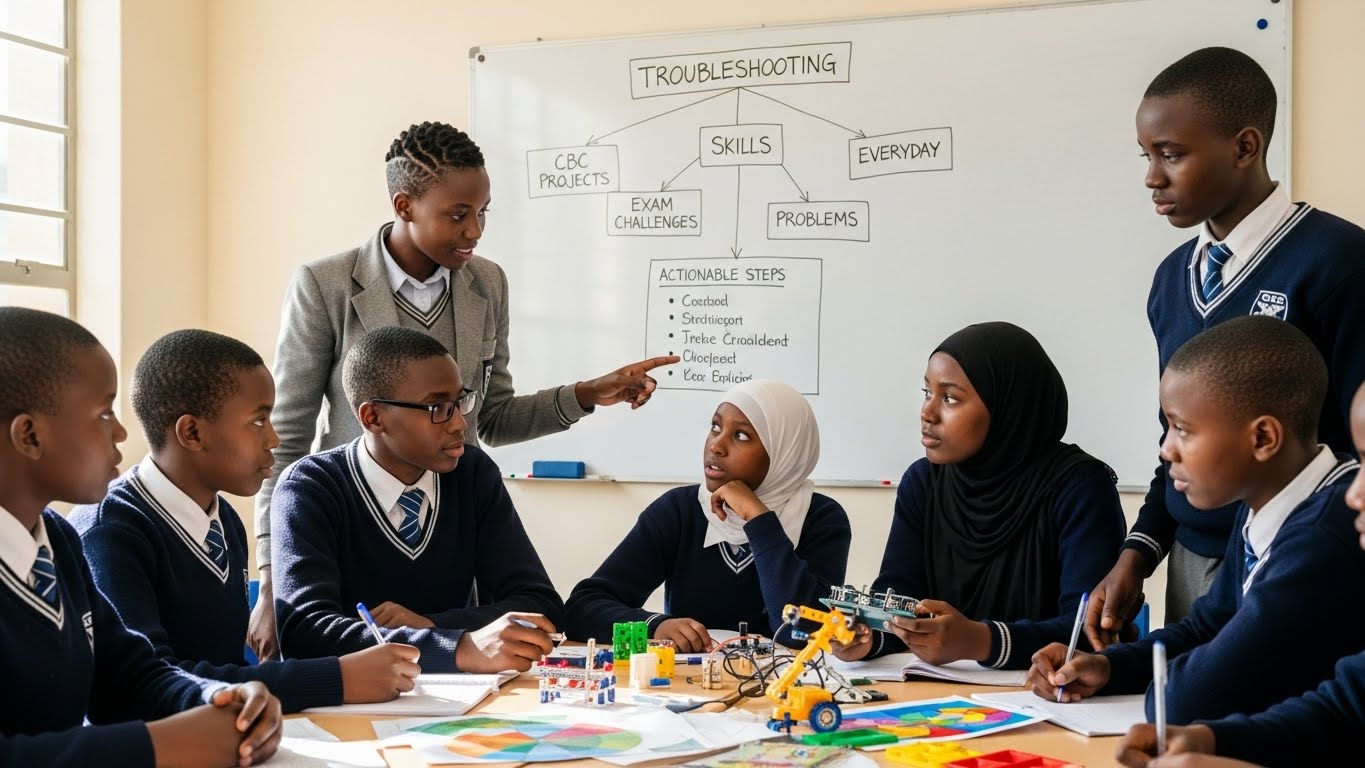
In a world filled with challenges—from a stalled science project and a tricky math equation to a broken-down phone or a disagreement with a friend—how do you find a solution? The answer lies in a powerful, universal skill: troubleshooting. For Kenyan students navigating the Competency Based Curriculum (CBC), which emphasizes problem-solving, or the 8-4-4 system with its high-stakes KNEC exams, mastering troubleshooting is not just useful; it's essential. This guide will break down this critical skill, showing students and parents exactly how to apply it to academic work and daily life in Kenya.
What is Troubleshooting and Why Does It Matter?
Troubleshooting is a systematic process of identifying, analyzing, and solving a problem. Think of it as being a detective for your own life. Instead of giving up when you face an obstacle, you follow steps to overcome it. In the Kenyan education context, this skill is at the heart of the CBC's core competencies like Critical Thinking and Problem Solving, and Imagination and Creativity. It helps students tackle project-based assignments, science practicals, and even complex essay questions. For parents, understanding this process allows you to better guide your child without simply giving them the answer, fostering independence and resilience.
The 5-Step Troubleshooting Framework for Any Problem
This simple framework can be applied to almost any situation, from fixing a gadget to studying for exams.
Step 1: Clearly Define the Problem
You can't solve a problem you don't understand. Be specific. Instead of "I'm failing math," identify the precise issue: "I cannot solve quadratic equations involving word problems." For a parent, if your child's school report is poor, define whether the issue is understanding, missing homework, or exam anxiety.
Step 2: Gather Information and Analyze the Root Cause
Investigate why the problem is happening. Look at your class notes, textbooks, or past papers. Did you miss a key concept in class? Is there a pattern to your mistakes? In a CBC project, is the issue research, materials, or time management? For technical problems (like no internet), check other devices or ask siblings if they're connected. This step is about asking "why" repeatedly until you find the source.
Step 3: Brainstorm Possible Solutions
List all potential fixes without judging them yet. For the math problem, solutions could be: ask the teacher for extra help, form a study group with classmates, watch online tutorial videos on YouTube (e.g., from Kenyan educators like Zeraki), or find additional practice problems from revision books like "Topical Revision." For a broken toy, solutions might be checking batteries, loose wires, or seeking a repair manual.
Step 4: Test Your Solutions and Observe Results
Put your best ideas into action, one at a time. Try watching one video tutorial and then attempt three practice problems. Did it help? If not, move to the next solution (e.g., study group). Keep track of what happens. This step requires patience and careful observation. In science practicals, this is the experimental phase.
Step 5: Implement the Fix and Prevent Future Issues
Once you find a solution that works, apply it fully. Master those quadratic equations with consistent practice. But don't stop there. Ask: How can I prevent this again? Perhaps you need to revise topics weekly instead of cramming before exams. For parents, if the issue was missed homework, a solution might be a shared homework planner and a quiet study space at home.
Applying Troubleshooting to Kenyan Academic Challenges
Let’s see how this works with real Kenyan school scenarios.
For KCSE/KCPE Exam Preparation: The problem is "low marks in composition." Root cause: Poor planning and time management during the exam. Solutions: Practice writing timed essays using past KNEC papers, learn a standard structure (introduction, body, conclusion), and build a vocabulary bank. Test: Write one essay per week and have your teacher mark it. Implement & Prevent: Use the successful structure in all practice and future exams.
For CBC Projects (Grades 4-6, Junior School): The problem is "my group's model is not working." Root cause: Unclear roles and poor material choice. Solutions: Hold a group meeting to reassign tasks, research alternative local materials (clay instead of plastic), consult the teacher. Test: Build a small prototype with the new materials. Implement & Prevent: For the next project, create a clear work plan and material list at the start.
For University/Course Selection (KUCCPS): The problem is "I don't know what course to pick." Root cause: Lack of information about careers and courses. Solutions: Use the KUCCPS portal to explore courses, attend career fairs, talk to professionals, take career assessment tests, and analyze your KCSE cluster subjects. Test: Shortlist three courses and research them deeply. Implement & Prevent: Submit your informed choices by the deadline and keep exploring interests throughout university.
The Role of Parents as Troubleshooting Guides
Your role is not to solve problems for your child, but to guide them through the process. Ask prompting questions: "What do you think is causing this?" "What have you tried so far?" "Where could you find more information?" Encourage them to speak to their teacher (TSC members are trained to help) or use school resources. Create a supportive home environment where it's safe to try solutions and sometimes fail, as long as they learn from it. This builds the self-reliance that the CBC and future employers value.
Conclusion: Becoming a Problem-Solving Champion
Troubleshooting is more than a technical skill; it's a mindset for life. By learning to define problems, investigate causes, test solutions, and learn from the results, Kenyan students equip themselves to handle academic pressure, technical glitches during online learning, and personal challenges. It transforms you from a passive learner into an active problem-solver—a competency that will serve you well in national exams, your future career, and everyday life. Start small today: identify one challenge, and walk through the steps. You have the power to find the solution.